The Scope of a Full Lay-Up
A complete winter lay-up goes beyond the engine and hull. The freshwater plumbing, holding tank system, bilge, batteries, upholstery, electronics, and the vessel's exterior cover all require attention before the boat sits unattended for four to six months in a Canadian winter.
This article addresses each system in order, from water treatment through interior preparation and cover installation. For engine flushing procedures, see the separate article on seasonal engine flushing. For haul-out and hull inspection, see the article on dry-dock preparation.

A vessel in a dry dock facility. Once the hull is secured on land, the lay-up process covers all interior and exterior systems before winter. (Source: Wikimedia Commons)
Freshwater Plumbing and Head Systems
Any closed loop that contains potable water — pressurized fresh water tank, water heater, faucets, shower sump — must be either drained completely or treated with non-toxic propylene glycol antifreeze before storage. Potable-grade propylene glycol is marketed under various marine brand names and is rated for use in plumbing that will contact drinking water.
Flushing procedure
- Drain the freshwater tank fully using the manual drain valve, if fitted, or by opening the lowest outlet until flow stops.
- Open every faucet, hot and cold, to relieve pressure and drain the lines.
- Drain the water heater from its dedicated drain plug or fitting — the heater often holds several litres that will not drain through the faucets alone.
- Pour approximately one to two litres of propylene glycol antifreeze into the water tank, then pump it through all lines by opening each faucet until the pink antifreeze appears at the tap.
- Pump antifreeze through the shower drain and sump if the vessel is so equipped.
Head (marine toilet) systems
Manual and electric marine heads should be flushed through with propylene glycol after draining the intake and discharge lines. Pour the antifreeze directly into the bowl and pump until it reaches the holding tank. The macerator pump on electric heads should also be cycled through with antifreeze. The holding tank itself should be emptied and pumped out at a marina pump-out station before lay-up.
Bilge Pump and Bilge System
The bilge should be as dry as possible before the vessel goes into covered storage. Residual water in the bilge will not only freeze and potentially damage bilge pump fittings, it also provides a damp environment that promotes mould and mildew growth on interior surfaces over the winter.
Run the bilge pump manually to clear any standing water, then sponge or absorb any remaining moisture. Pour a small amount of propylene glycol antifreeze into the bilge sump to protect the pump impeller and pickup screen. Disconnect the automatic float switch from the battery circuit — or remove the fuse for the bilge pump circuit — so the pump does not run against a dead battery during unattended storage.
Ethylene glycol vs. propylene glycol: Automotive antifreeze is ethylene glycol, which is toxic to animals and humans. It should never be used in marine potable water systems or where runoff could enter waterways. Non-toxic propylene glycol — often pink in colour — is the correct product for all onboard plumbing, head systems, and bilge treatment.
Battery Maintenance During Storage
Lead-acid and AGM batteries discharge slowly even when disconnected. A fully discharged lead-acid battery left in sub-zero temperatures can freeze, which permanently damages the plates. A fully charged battery has a significantly lower freezing point than a discharged one.
Options for winter battery care
- Remove and store indoors: The most reliable option for locations with prolonged hard freezes. Charge the batteries fully before storage and connect a maintenance charger (float charger) to keep them at full charge through the winter.
- Leave onboard with a maintenance charger: If shore power is available at the storage yard, a float charger connected to the battery bank will keep batteries charged without overcharging. Confirm the shore power connection is secure and that the charger is rated for the battery bank capacity.
- Disconnect and leave onboard: Acceptable in heated storage facilities or mild climates, but carries the risk of discharge and potential freezing in unheated storage in most Canadian regions.
Interior Preparation
The interior of a covered vessel can develop mould, mildew, and musty odours during a long storage period if moisture is present and airflow is restricted. Several steps reduce this risk.
Fabric and upholstery
Remove all cushions, canvas covers, dodger, and bimini fabric from the vessel before winter. These items store better in a dry, ventilated space ashore than inside a sealed boat. Mould on marine upholstery foam can be difficult to eliminate once established, and the foam typically retains odours even after surface cleaning.
Food, liquids, and consumables
Remove all food, beverages, and cleaning products from the vessel. Rodents are active in storage yards and will enter through any gap to access food. Spillage from bottles during storage can damage woodwork, and food containers left onboard attract pests regardless of the season.
Ventilation
Leave all interior lockers and cabinet doors open or ajar to allow air circulation. If the vessel has dorade vents or cowl vents, leaving them open or partially open (fitted with screens to prevent bird or rodent access) improves air exchange through the winter. A few small moisture-absorbing desiccant bags placed in enclosed bilge spaces can reduce humidity without the fire or odour risk associated with charcoal products left unattended.
Cover Selection
A well-fitted cover is the exterior component most visible in storage yards, and it does real work: it sheds snow load, prevents UV degradation of gel coat and teak during the few sunny winter days, and reduces the rate at which ice accumulates on hardware and rigging.
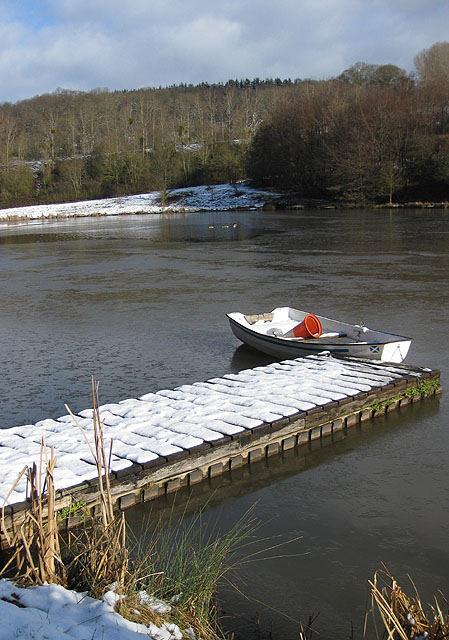
A vessel on shore in winter conditions. A proper cover prevents snow load accumulation and protects surfaces from freeze-thaw cycles. (Source: Wikimedia Commons)
Shrink-wrap
Polyethylene shrink-wrap applied by a yard technician with a heat gun produces a tight, form-fitting shell over the vessel. It handles heavy snow loads well, seals out rodents, and is UV-stabilised for one season of use. The material is not reusable — it is cut away in spring and disposed of. Many Canadian marinas offer shrink-wrapping as a yard service during the October haul-out season.
Custom canvas covers
Sunbrella or similar acrylic canvas covers built to the vessel's measurements provide multi-season use. They can be fitted with a ventilation panel to reduce condensation, and they are removable for inspection during storage. A frame structure of PVC pipe or fibreglass battens is built over the cockpit and cabin to create a peaked shape that sheds snow rather than allowing it to accumulate and sag.
Universal-fit poly tarps
Heavy-duty woven polyethylene tarps are the lowest-cost option. They work adequately on simple hull shapes but are prone to chafing against sharp edges, flapping in wind, and collecting water in low points rather than draining off. If used, they should be tied down at multiple points with a frame underneath to create a peaked tent shape.
Final Lay-Up Checklist
- Engine flushed and fogged — all circuits drained or antifreeze treated
- Fuel tanks topped off and stabilizer added — or drained per manufacturer guidance
- Lower unit gear lube changed
- Freshwater plumbing drained and antifreeze treated
- Head system drained and antifreeze pumped through
- Holding tank pumped out
- Bilge pumped dry and treated with propylene glycol
- Bilge pump fuse removed or float switch disconnected
- Batteries removed or connected to float charger
- All fabric, cushions, and canvas removed to shore storage
- Food, beverages, and perishables removed from vessel
- Interior lockers and doors left open for ventilation
- Through-hulls and seacocks checked and closed
- Cover installed with support frame and secured
- Dock lines, fenders, and loose gear stowed or removed